Zero-Downtime E-Commerce Deployments: Blue-Green Deployments, Automated E2E Testing, and Database Migration Safeguards

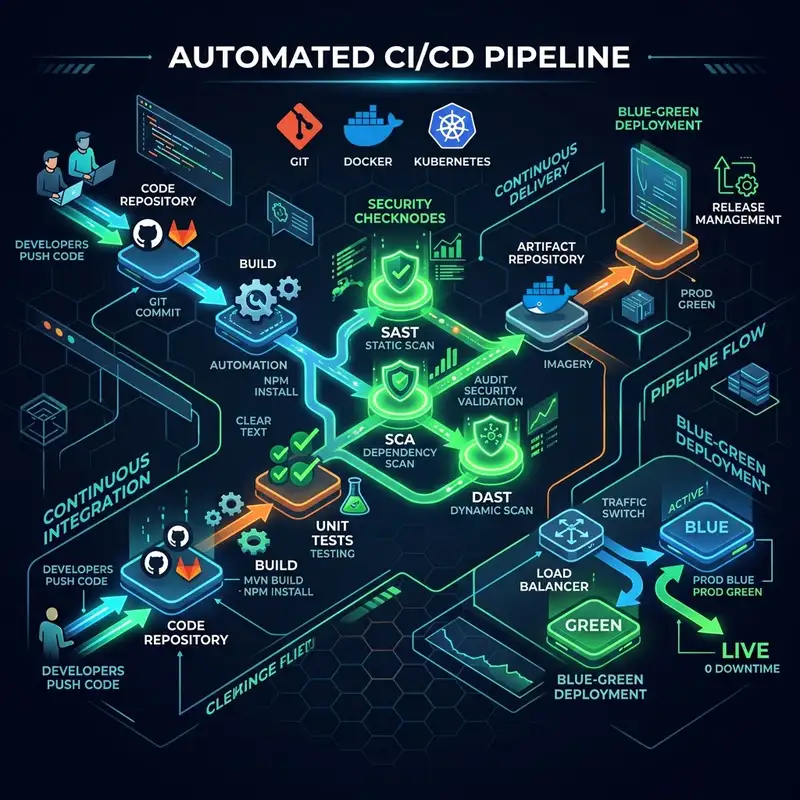
For high-traffic e-commerce platforms and SaaS products, site downtime directly translates to lost revenue, failed checkout transactions, and damaged customer trust. Deploying new features during peak shopping hours must happen with zero service interruptions.
A single destructive database migration (such as dropping a column immediately) or an undetected breaking API change will cause live user checkouts to fail with HTTP 500 Internal Server Errors.
To guarantee continuous availability, modern DevOps teams enforce a Zero-Downtime Deployment Pipeline consisting of: 1. Blue-Green Deployment Routing: Running two identical production environments (Blue = active, Green = staging) and switching load balancer traffic atomically. 2. Automated Playwright E2E Gateways: Running synthetic checkout tests before traffic cutovers. 3. Expand-Contract Database Migrations: Two-phase database migrations that preserve backward compatibility for active production containers.
Here is an architectural guide to engineering zero-downtime CI/CD deployment pipelines.
The Blue-Green Deployment Architecture
[ Load Balancer / CDN ]
                                 │
                   (Atomic Traffic Cutover Switch)
                                 │
              ┌──────────────────┴──────────────────┐
              ▼                                     ▼
   [ Blue Environment (v1.0) ]           [ Green Environment (v2.0) ]
       (Currently Active)                    (Staging / Pre-Flight)
              │                                     │
              └──────────────────┬──────────────────┘
                                 ▼
                     [ PostgreSQL Database ]
                    (Schema Compatibility)
Step-by-Step Implementation
1. The Expand-Contract Database Migration Pattern Never rename or delete database columns in a single deployment. If Environment Blue (v1.0) is still running while the database runs a breaking migration, active user sessions will crash instantly.
Follow the Expand-Contract (Parallel Change) pattern across three separate deployments:
- Phase 1 (Expand): Add the new column or table alongside the old one. Write code that writes to both old and new columns, but reads from the old column.
- Phase 2 (Migrate Data & Swap Reads): Backfill historical data from old column to new column. Deploy code that reads from the new column.
- Phase 3 (Contract): After Blue environment containers are terminated, drop the old column safely in a subsequent deployment.
-- PHASE 1 MIGRATION: Add new column without breaking existing code
ALTER TABLE users ADD COLUMN phone_number_v2 VARCHAR(32);

-- Backfill data asynchronously without lock escalation
UPDATE users SET phone_number_v2 = phone_number WHERE phone_number_v2 IS NULL;
2. GitHub Actions CI/CD Pipeline with Playwright Gatekeeping Automate pre-deployment verification using GitHub Actions. Build the Green deployment container, run Playwright end-to-end tests against real checkout routes, and swap load balancer routing only when all tests pass:
# .github/workflows/deploy.yml
name: Zero-Downtime Deployment

on:
  push:
    branches: [main]

jobs:
  test-and-deploy:
    runs-on: ubuntu-latest
    steps:
      - name: Checkout Code
        uses: actions/checkout@v4

      - name: Setup Node.js
        uses: actions/setup-node@v4
        with:
          node-version: 20
          cache: "npm"

      - name: Install Dependencies
        run: npm ci

      - name: Run Unit & Integration Tests
        run: npm run test

      - name: Build Staging Container (Green)
        run: npm run build

      - name: Run Playwright E2E Checkout Tests
        run: npx playwright test --config=playwright.config.ts
        env:
          TEST_BASE_URL: "https://green-staging.laurincequijano.com"

      - name: Atomic Traffic Switch (Blue-Green Swap)
        if: success()
        run: |
          echo "Playwright tests passed! Swapping Load Balancer target to Green..."
          curl -X POST https://api.provider.com/v1/loadbalancer/swap             -H "Authorization: Bearer ${{ secrets.DEPLOY_TOKEN }}"
Deployment Strategy Comparison Matrix
| Deployment Model | Downtime Risk | Rollback Speed | Database Safety |
|---|---|---|---|
| In-Place Deployment | High (Seconds to minutes of site outages) | Slow (Re-building previous commit) | Low (Risks lock escalation) |
| Rolling Deployment | Medium (Transient version mismatches) | Moderate | Medium |
| Blue-Green Deployment | Zero Downtime | Instant (Sub-second load balancer revert) | High (Protected via Expand-Contract) |
Best Practices for Enterprise Deployment Safeguards
- Synthetic Transaction Monitoring: Run automated Playwright synthetic user scripts every 5 minutes on live production checkouts to detect gateway issues before real shoppers encounter them.
- Health Check Gateways: Ensure load balancers check
/api/healthendpoints to verify database connection pools, Redis memory, and third-party APIs before routing live traffic to a new instance. - Feature Flags (LaunchDarkly / PostHog): Wrap major new features inside feature flags. If a new checkout flow exhibits errors in production, disable the flag instantly without performing a full server rollback!
By combining Blue-Green load balancer routing, Expand-Contract database migrations, and automated Playwright E2E gatekeeping, your web platform achieves 99.99% uptime while shipping new features continuously!
Need premium developer consulting?
Let's discuss how we can build API split checkouts, dynamic Next.js interfaces, or speed audits for your business.
Get in Touch